The full story
Wonder Man is a Marvel Spotlight series—a standalone, character-driven story with a lighter footprint on the larger MCU—that introduces Simon Williams as a new kind of superhero: one who just wants to be a movie star.
The series is set against a Hollywood shaped by the Sokovia Accords' aftermath. A law called the Doorman Clause bans superpowered individuals from working in the entertainment industry, placing Simon in an impossible position. He has superhuman strength, near-invulnerability, the ability to manipulate ionic energy, and—as the series reveals—the ability to fly. He has had these powers since childhood, when he survived a house fire completely unscathed at thirteen. He has spent his entire life hiding them, not just because of the Doorman Clause, but out of a deep fear that the powers make him other, make him something people won't accept.
The show opens with Simon getting fired from a bit part in American Horror Story. He asks too many questions, cares too much about the meaning behind a throwaway scene, and annoys everyone until they let him go. This establishes Simon's core tension: he is intensely serious about his craft in an industry that does not always reward sincerity, and his powers make everything more fraught because losing control—even slightly—could destroy everything.
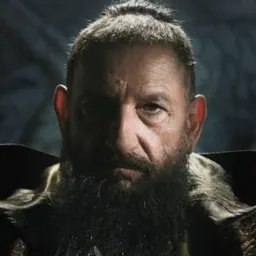
His luck changes through Trevor Slattery, Ben Kingsley reprising the character introduced in Iron Man 3. Trevor is a veteran actor whose career and reputation were shattered when it emerged he was paid to impersonate the Mandarin as a decoy for the real terrorist organization. He has never quite recovered—professionally or psychologically—and he is doing community theater and paying off a debt to the DODC, who have not yet fully closed the book on his crimes.
Trevor is the one who learns that Von Kovak, a reclusive auteur director (played by Zlatko Burić), is producing a remake of a beloved cheesy 1980s in-universe superhero film called Wonder Man. The original is Simon's favorite movie—he watched it as a child with his father and it is the reason he became an actor. Through a series of mishaps and audacious maneuvering, Simon and Trevor both land roles: Simon as the title character, Trevor as his manservant Barnaby.
For a brief time, it works. Simon is good at this—genuinely good, bringing real emotional depth to a role that was written as kitsch. Von Kovak recognizes that Simon's earnestness is an asset. The production is exciting. Simon begins to believe he might actually have a future in film.
Then the complications arrive. A New York Times reporter begins investigating Simon's sudden rise—he is convinced she knows about his powers, but she is actually more interested in Trevor's Mandarin past. Agent P. Cleary of the DODC (Arian Moayed, reprising his role from Spider-Man: No Way Home) has been monitoring Simon since anomalous energy readings appeared near his early auditions. Cleary is not initially hostile—he is curious more than suspicious—but he is thorough.
The betrayal that breaks Simon open comes when he discovers that Trevor has been feeding information to the DODC. Trevor's deal with the department to avoid completing his prison sentence required him to report on Simon. He did not set out to hurt Simon—he genuinely came to love him as a friend and collaborator—but he made a deal before that friendship existed and has been trapped by it ever since.
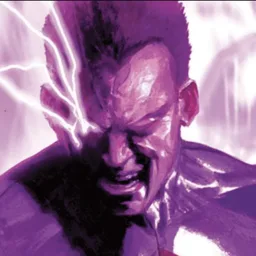
Simon's reaction is a full ionic discharge. He does not choose to use his powers. He loses control. The energy pulses out of him and wrecks the production set, knocks out power across a wide radius, and leaves a crater of evidence that the DODC immediately begins analyzing. When Cleary runs the tests on an ionic level, he identifies exactly what Simon is: a human being who generates and channels electromagnetic ionic energy. His conclusion is that Simon Williams is an extraordinary threat.
The DODC takes Trevor into custody, citing his prior arrangement. Simon is now publicly exposed as a powered individual, which means he is in violation of the Doorman Clause and potentially subject to detention. The Wonder Man film is shut down. Von Kovak is furious. Everything Simon built has collapsed.
But Simon has also, for the first time, fully accepted what he is. He spent his whole life treating his powers as a liability, a secret to protect, an obstacle to the identity he wanted. The explosion was humiliating and destructive. It was also honest. Simon did not hide. He broke.
In the finale, he channels that acceptance into action. He infiltrates the DODC facility by disguising himself, then drops the disguise entirely and openly uses his powers for the first time in his life without shame or calculation. He is stronger than the DODC expected. He is faster. And in the sequence that closes the season, he reveals the ability he has never used before: he can fly.
Simon tears open Trevor's cell, takes him by the arm, and they burst through the ceiling into open sky—Simon in a haze of ionic energy, Trevor terrified and thrilled in equal measure. It is the image that mirrors the old Wonder Man film Simon watched as a child: a powered person choosing to use their gift not as a weapon but as a declaration.
The series ends here, without a post-credits scene—a deliberate choice that reflects the Marvel Spotlight ethos of telling complete stories rather than threading teasers.
Several questions are left intentionally unanswered. The origin of Simon's powers is never fully explained. He does not know where they came from. Unlike most MCU heroes, there was no experiment, no accident, no cosmic event. They appeared in childhood and grew with him. The show's creators have declined to confirm whether Simon is a mutant, but the early manifestation of powers with no external cause is conspicuous. The X-Men are coming to the MCU, and Simon's ambiguous origins keep that door open.
The larger MCU context positions Wonder Man as a foundational piece for future developments. Simon is near the power level of the MCU's strongest heroes—ionic energy manipulation, super strength, invulnerability, and flight represent a formidable package. He is also largely untethered from the established Avengers framework, making him a flexible asset for whatever comes next. The DODC's identification of him as a threat sets up the next phase of the anti-powered-individual political conflict that has run through the MCU since the Sokovia Accords. And Agent Cleary's continued involvement connects Wonder Man to Spider-Man: Brand New Day, where the DODC is expected to play a significant role.
Wonder Man received strong reviews—90% on Rotten Tomatoes—praised for its warm comedy, Ben Kingsley's work as Trevor Slattery, and its willingness to tell a small, human story against a superhero backdrop. It is, at its core, a show about someone who loves something (acting) and fears that who they are (powered, different, other) means they can never have the thing they love. Simon Williams proves that wrong—but the proof costs him the specific form of the dream he had been chasing, and replaces it with something bigger and stranger and still unresolved.