The full story
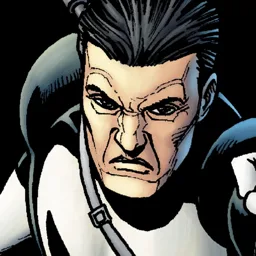
The Punisher: One Last Kill is a Marvel Television Special Presentation—a standalone, tightly contained story running roughly forty-eight minutes—that gives Jon Bernthal's Frank Castle his most personal and most violent MCU outing to date. It is unambiguously R-rated, the most brutal project Marvel has produced, and it uses that brutality with purpose: this is a story about what is left of a man once the thing that defined him is gone.
The special opens on a Frank Castle who has, by his own accounting, finished. Last seen escaping the prison encampment Wilson Fisk built during Daredevil: Born Again, Frank has secluded himself in an apartment in New York's Little Sicily neighborhood. He believes he has killed the last of the criminals responsible for the murders of his wife and children. The revenge that has driven him across every previous appearance is, finally, complete. And it has left him hollow. There is, he tells himself, nothing left to do.
This is the special's central tension. The Punisher has always been defined by his mission—the relentless, methodical extermination of the people who took his family. One Last Kill asks the question that the mission always deferred: who is Frank Castle when there is no one left to punish? It finds him haunted, adrift, and quietly suicidal in his purposelessness, surrounded by ghosts and unable to imagine a life that is not organized around killing.
The world does not leave him alone. Little Sicily is collapsing into lawlessness. Crime has escalated to an aggressive, open degree—thugs assault civilians in broad daylight, and even the NYPD will not set foot in the neighborhood. Into this vacuum steps the Gnucci crime family, and their matriarch, Ma Gnucci (Judith Light), a ruthless figure who comes to Frank seeking payback and pulls him back into the war he thought he had ended.
Frank's few human connections anchor the story. Karen Page (Deborah Ann Woll) and Curtis Hoyle (Jason R. Moore) reappear from his Netflix history, representing the parts of Frank that are not purely the Punisher—the friendships and tenderness that survive underneath the violence, and the people who still believe he could be something more than a weapon.
The special builds to a deliberately symbolic climax. Frank is given a choice that crystallizes everything the story has been circling: he can pursue Ma Gnucci and take his revenge—do the one last kill the title promises and the thing he has always done—or he can turn away from vengeance and save the people of Little Sicily from the riots and violence tearing the neighborhood apart. For the first time, Frank chooses the latter. He chooses to be a protector rather than an executioner, to save lives instead of taking one more. It is not a tidy redemption, but it is a genuine pivot: the Punisher choosing, against the entire logic of his existence, to be a hero.
The production became as notorious as the story. Jon Bernthal famously performed a stunt in which he literally set himself on fire, underscoring the special's grounded, punishing, practical approach to its action.
One Last Kill connects directly to Daredevil: Born Again, continuing Frank's arc out of Fisk's New York, and it deepens the street-level corner of the MCU just as those characters reassemble. It served Marvel's Special Presentation format well—a complete, self-contained story rather than a feature-length teaser—and was a major critical and audience success, drawing some of the strongest reviews of any recent Marvel project and an enthusiastic audience response for delivering the brutal, character-driven Frank Castle story longtime fans had wanted.