


The full story
The Falcon and the Winter Soldier operates on a deceptively simple premise: two men, a shield, and the question of who deserves to carry it. But the real conflict is not about the shield. It is about legacy, nation, and whether symbols can mean anything in a world that refuses to change the systems they represent.
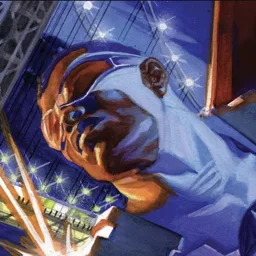
Sam Wilson is a decorated military pilot and Avenger. He is also a man who cannot get a loan to save his family's business. The banking system does not recognize his service. It sees only the color of his skin. This is the quiet catastrophe at the center of Sam's arc. He is too small to matter to the systems he is trying to change, but he accepts the largest symbol in those systems, bearing the weight of America's self-image while that system continues to refuse him basic dignity.
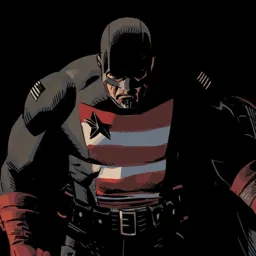
When John Walker, a war hero with three Congressional Medals of Honor, is officially given the shield instead of Sam, the series reveals that legitimacy and justice are different. Walker is objectively qualified. He is also wrong. The question of who should carry the shield cannot be answered by qualifications alone. It requires asking what the shield means and who gets to define it.
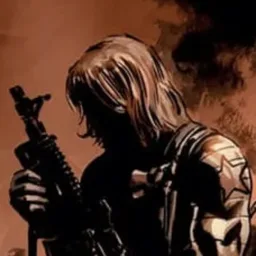
Bucky Barnes carries the weight of the Winter Soldier—decades of murders committed while he was controlled by HYDRA. Sam knows the truth of Bucky's past. Bucky cannot forgive himself for it. Neither of them can erase it. The series shows them working together not because they have healed their trauma but because they choose to act despite it.
The Flag Smashers, the series' primary antagonists, are not evil. They are people displaced by the blip, the five-year period when half of humanity was gone. They have created a borderless community, and they are willing to use violence to prevent governments from recreating the divisions that abandoned them. Their cause makes sense. Their methods do not. The show does not judge them as wrong; it judges their violence as counterproductive to their own stated goals.
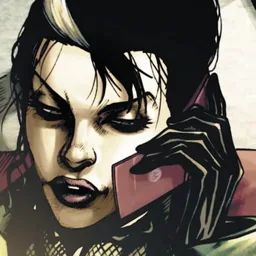
Karli Morgenthau, the Flag Smasher leader, is young and radicalized. She believes the world was better during the blip, when artificial scarcity forced cooperation. She is not pursuing power. She is pursuing a world. This makes her dangerous in a different way than a traditional villain. She is dangerous because her cause has merit and her reasoning is not flawed—only her willingness to kill for it is.
John Walker's descent is the emotional crux of the series. He is not corrupt at the beginning. He is simply a man raised to believe that American military power is righteous. When he kills a Flag Smasher, he does so believing it is justified. When he realizes it was not, when he sees the image of himself with a bloodied shield, he breaks. The shield demands something from those who carry it, and Walker discovers he cannot provide it. Not because he lacks courage, but because the symbol requires a kind of sacrifice most people are not willing to make.
Sam's final acceptance of the shield is not triumphant. It is a promise. He is saying: I will carry this symbol, and I will try to make the nation it represents worthy of the meaning I am placing on it. But that is his burden to bear, not the nation's obligation to help him bear it.
The series ends with Sam as Captain America, Bucky beginning to forgive himself, and Karli dead—not defeated, but dead, her cause unfinished. Nothing is truly resolved. Sam has the shield. Bucky is still haunted. The Flag Smashers' original grievance, the displacement of half the world, remains unaddressed by any power structure that can actually address it. But all three of these characters have chosen to act anyway, which is the only choice available to them.