The full story
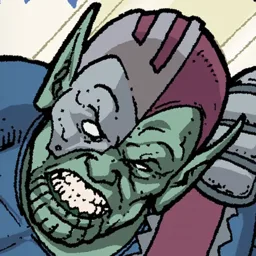
Secret Invasion operates as a political thriller where the threat is not the Skrulls themselves but the loss of certainty about identity and allegiance. Anyone could be a Skrull. Everyone could be compromised. The enemy is not invading—the enemy is already inside.
The series suggests that institutions are only as solid as the trust people place in them. Once you cannot verify that the people running institutions are actually who they claim to be, the institutions themselves become unreliable. If the Joint Chiefs of Staff might actually be Skrulls, if the President might not be the President, then the entire apparatus of governance is compromised.
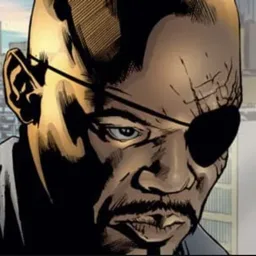
Nick Fury has built his career on information asymmetry—knowing things others do not, controlling information flow, maintaining uncertainty in his enemies while maintaining certainty for himself. In Secret Invasion, someone has created information asymmetry against him. Fury does not know who is a Skrull. He is operating from ignorance while his enemies operate from comprehensive knowledge. This reversal defines his arc.
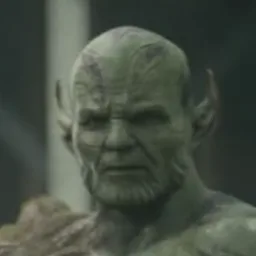
Talos, a Skrull ally from previous MCU films, is also trying to prevent the invasion. He wants coexistence between Skrulls and humans. Gravik, a younger Skrull who feels abandoned by both Fury and his own people, wants Earth for the Skrulls—not through negotiation but through conquest. Fury's neglect created the power vacuum Gravik used to rise to power, convincing the younger generation of Skrulls that Fury failed them and they should take Earth as their new home.
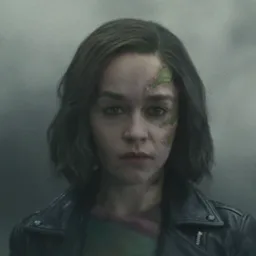
The conflict between Skrull factions means the invasion is not unified—it is fractured, with different Skrulls pursuing different goals. Some want to destroy humanity. Some want to save it. G'iah, Talos's daughter, is caught between her father's dream of coexistence and Gravik's vision of conquest. She infiltrates Gravik's operation as a double agent, trying to protect both her people and the humans her father believed in.
In episode four, Gravik kills Talos—stabbing him in the heart during a confrontation. Talos dies in the street while Fury watches, unable to save his oldest ally. The loss devastates Fury and G'iah, but it also clarifies their purpose: Gravik must be stopped.
Gravik has been secretly developing a machine that can combine the DNA of multiple superheroes and villains to create Super-Skrulls—shapeshifters with superhuman powers. He plans to use this technology to create an unstoppable army and trigger a nuclear war that will devastate humanity while leaving the radiation-immune Skrulls to inherit the Earth.
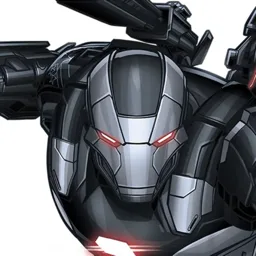
The series shows that paranoia is partially justified—there really are infiltrators, including high-level government officials and even James Rhodes, who has been replaced by a Skrull imposter. But paranoia as policy is destructive. Fury becomes increasingly isolated, unable to trust anyone, making decisions from fear rather than strategy.
The finale reveals that G'iah has been posing as Fury to infiltrate Gravik's inner circle. When Gravik uses the Super-Skrull machine on himself, G'iah does the same, gaining the combined powers of multiple heroes including Captain Marvel, Ghost, Groot, and others. The two Super-Skrulls battle, and G'iah—using Mantis's abilities to put Gravik to sleep and Captain Marvel's power to blast through his chest—kills him.
G'iah then frees the humans imprisoned at the Skrull compound, including Everett Ross and the real James Rhodes, who has been held captive for an unknown length of time. The revelation of how many people were replaced shakes the foundations of trust in global institutions.
By the series' end, the Skrull invasion is not prevented through clean victory—it is revealed and then managed through difficult compromises. Fury returns to S.A.B.E.R., the orbital space station, to work on a Kree-Skrull peace treaty, addressing the larger refugee crisis that created this conflict. G'iah forms an alliance with Sonya Falsworth, a British intelligence operative, to help the kidnapped humans recover and forge a new path for displaced Skrulls seeking genuine asylum rather than conquest.
Secret Invasion suggests that total certainty about who is trustworthy is impossible and that attempting to achieve it creates paranoia more dangerous than the original threat. People and governments must make choices based on incomplete information. The series does not offer easy answers—Gravik is defeated, but the systemic problems that created him remain. Some Skrulls are still in hiding. Some humans still want to weaponize them. And the question of what humanity owes to refugees fleeing genocide—even when those refugees can look like anyone—remains uncomfortably unresolved.