The full story
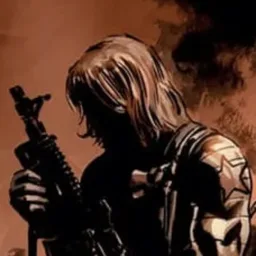
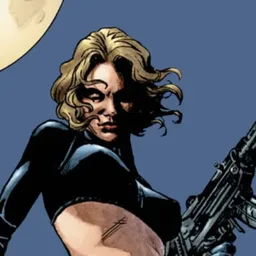
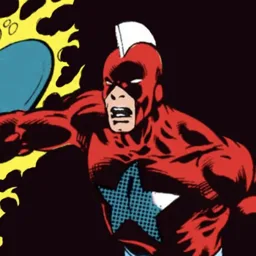
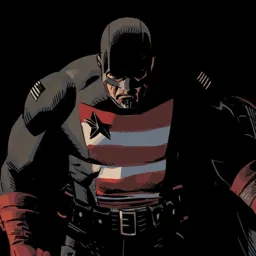
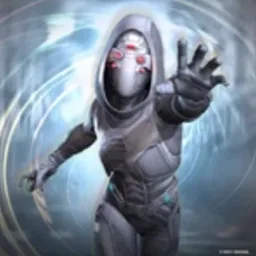
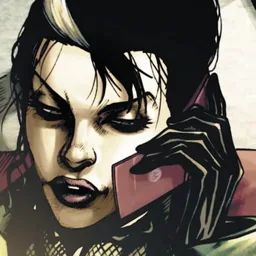
Yelena Belova destroys a lab in Kuala Lumpur because Valentina Allegra de Fontaine told her to. She's working off her sister's death, trying to find meaning in black ops work. Bucky Barnes is now a U.S. Congressman representing Brooklyn, pulled back into black ops when his aide tips him off to Valentina's scheme. John Walker was stripped of the Captain America title and is desperate to prove he deserves a second chance. Alexei Shostakov wants his daughters to be proud of him. Ava Starr is still phasing in and out of existence, barely holding together.
Valentina has been assembling them, one mission at a time, and they don't realize she's preparing to burn them all. She's involved with the O.X.E. Group's Sentry project—an attempt to create a superhuman as powerful as Captain America or the Hulk. The project is illegal, dangerous, and her fingerprints are all over it. The Thunderbolts are loose ends, and Valentina has designed a mission that will eliminate them.
They figure it out when the mission becomes a kill box—Valentina traps them in a vault alongside Antonia Dreykov, another of her operatives, Taskmaster. In the chaos, Ghost's phasing kills Taskmaster before the others even understand what's happening. These broken operatives who barely trust themselves have to trust each other to survive. Bucky, decades of experience as the Winter Soldier, takes tactical lead. Yelena refuses to die for someone else's agenda. Walker fights like a man who has something to prove. They escape but they're fugitives now, hunted by Valentina's other assets.
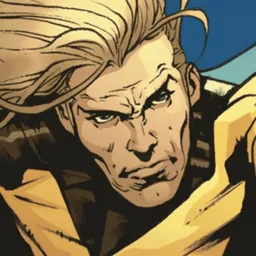
The Sentry program has created someone—Bob Reynolds—whose powers are god-like and whose stability is nonexistent. Valentina plans to unleash him as a controllable weapon. The Thunderbolts decide to stop her, not because it's heroic but because she tried to kill them and that requires a response.
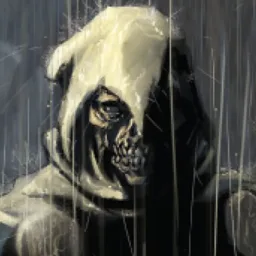
The Void—Bob's darkest self—engulfs New York in psychological darkness. Yelena chooses to walk into it and finds herself inside Bob's memories: an abusive childhood, the roots of a self-loathing that curdled into something monstrous. The rest of the team follows her in. Rather than fighting the Void, they confront Bob's trauma alongside him and hold onto him, refusing to let go. It's enough. Bob regains control, the Void recedes, and the black mist over the city dissipates. He survives, but suppresses the Sentry power afterward, warning that waking it again could bring the Void back.
Valentina escapes prosecution but loses her leverage. The Thunderbolts are offered jobs, oversight, rehabilitation. They refuse. They take the name "New Avengers" instead—a team of people who have done terrible things trying to do better. Not redemption arcs gifted from above, but something they're building themselves, one questionable decision at a time.
The asterisk in the title becomes clear: they're not Thunderbolts, villains pretending to be heroes. They're something messier and more real—people who have been weapons deciding to be human.