

The full story
Deadpool asks what happens when the marginalized fight back without seeking permission or redemption. It is a film about disability, disfigurement, and the difference between a victim and a survivor.
Wade Wilson is not a hero. The film establishes this immediately and maintains it throughout. He is a man who kills people for money. When he meets Vanessa, it is not a redemptive romance that transforms him into a better person. It is the moment when a killer recognizes someone who understands him. They are both people living on society's margins—Wade by profession, Vanessa by circumstance. They recognize each other's essential selves and choose to be together anyway.
When Wade enters the experimentation facility expecting transformation into a superhero, what he receives instead is torturous disfigurement. His face becomes a mass of scar tissue. His body becomes immortal and uncontrollable. The facility's operator, Francis, calls this enhancement. It is enhancement in the technical sense—Wade's power is exponentially greater. It is degradation in every human sense. Wade cannot look in a mirror without confronting his own destruction.
The film's genius is that it does not present Wade's disfigurement as something that can be overcome through positivity or acceptance. He hates how he looks. The film validates this hatred rather than asking him to transcend it. He wants to find Francis and force him to restore what was taken. This is not a quest for redemption; it is a quest for restitution. Wade wants the man who destroyed him to fix what he destroyed.
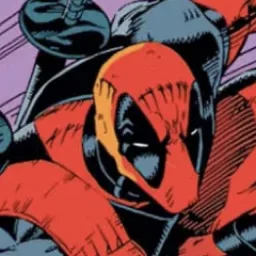
Deadpool, the mercenary, is Wade's response to powerlessness. The costume, the humor, the violence—these are not character traits. They are armor. Wade uses comedy to make his pain acceptable to others, to transform trauma into entertainment. The film understands that humor can be a weapon and a shield simultaneously. He uses it to keep people at a distance while also drawing them close.
When Vanessa is kidnapped and presumed dead, Wade's response is not heroic. It is desperate. He does not gather a team or devise a strategy. He kills everyone in his path with brutal efficiency, searching for Francis. He is not fighting for justice or for the world. He is fighting for the specific person who loves him despite what he has become.
The film's violence is not sanitized. It is visceral and consequential. Wade kills people and people die and there is no redemptive arc that erases this. The film does not ask the audience to forgive Wade for being a killer. It asks the audience to understand that Wade has chosen to be a killer, and that in this particular instance, his killing is directed at someone who tortured him. The moral calculus is not simple, which is precisely the point.
What remains is Wade transformed but not redeemed. He reunites with Vanessa. He continues to be a killer. He has not learned a lesson or grown as a person. He has simply survived and reclaimed agency over his own narrative. He will not be saved. He will not be integrated into society. He will not become a hero. He will be exactly what he wants to be, and the film celebrates this refusal to change.